Repetitive transcranial magnetic stimulation (rTMS)
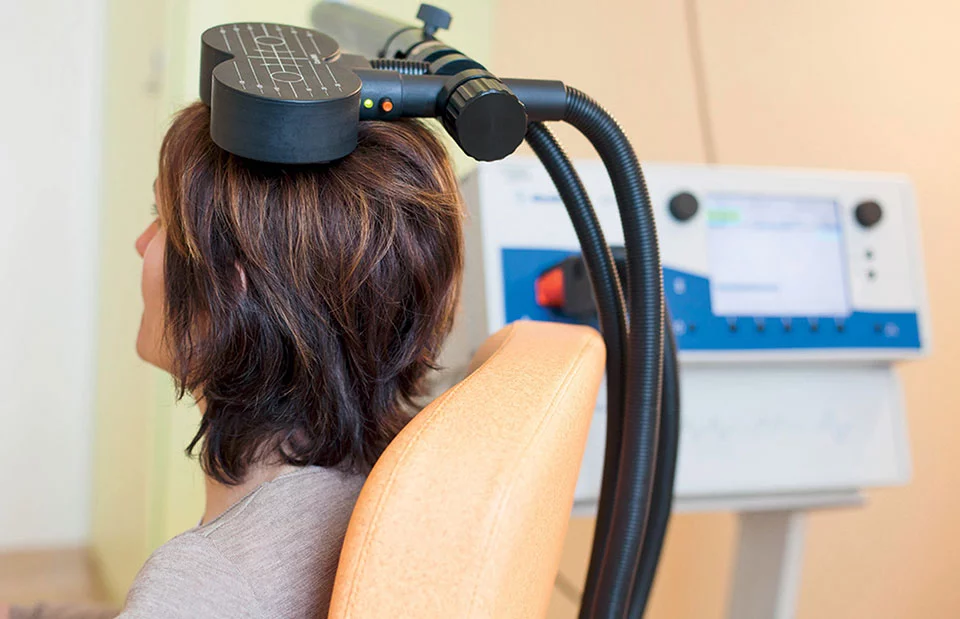
Repetitive transcranial magnetic stimulation (rTMS)
Repetitive transcranial magnetic stimulation (rTMS) is a non-invasive treatment that uses repeated magnetic pulses to stimulate areas of the brain involved in mood regulation. It is most often considered for people experiencing major depression when medication and psychological therapy have not provided enough improvement. Treatment is prescribed following a clinical assessment and can be used alongside other mental health treatments when appropriate.
How does rTMS work?
During treatment, an electromagnetic coil is positioned against the scalp. The coil delivers controlled magnetic pulses that pass through the skull and induce small electrical currents in the targeted area of the brain. This stimulation is intended to influence activity and communication within brain networks associated with depression. Intermittent theta-burst stimulation (iTBS) is a shorter pulse pattern used to deliver some forms of rTMS; the most suitable protocol is determined by the treating psychiatrist.
Potential benefits of rTMS treatment
- Non-invasive treatment
- rTMS does not require surgery, implanted electrodes, sedation or general anaesthesia. You remain awake throughout each treatment session.
- Focused stimulation
- The magnetic pulses are directed towards a selected brain region, allowing treatment to focus on networks associated with mood regulation.
- Established option for major depression
- Clinical evidence supports rTMS for major depression, particularly when previous treatments have not provided satisfactory improvement. Results vary between individuals.
- Generally well tolerated
- Common side effects are usually temporary and may include scalp discomfort, headache, fatigue or facial muscle twitching during stimulation.
- Can complement other treatments
- When clinically appropriate, rTMS can be combined with psychological therapy and medication as part of a broader mental health treatment plan.