
It’s hard not to feel overwhelmed sometimes. Even when your personal life is relatively stable, the outside world does not let up. War, humanitarian crises, rising living costs, political tension, health scares and natural disasters can all arrive through the same screen, often within minutes of each other.
For some people, this constant stream becomes more than a passing concern. It can develop into persistent worry, helplessness, emotional exhaustion or a feeling that the world is no longer safe. The World Health Organization describes stress as a natural human response to difficult situations and notes that it commonly increases during economic crises, disease outbreaks, disasters, war and community violence. [1]
You do not need to be directly involved in an event for it to affect you. Australia’s National Mental Health Commission recognises that ongoing exposure to conflict-related news can affect mental health even when someone has no direct personal connection to the events. Fear, sadness, heightened alertness and helplessness are common responses during periods of global unrest. [2]
Research also suggests that the amount and intensity of news exposure matter. A 2022 study published in JMIR Mental Health followed 546 university students over eight weeks. Greater daily exposure to COVID-19 news was associated with higher same-day and next-day worry, which was in turn linked to greater general worry and hopelessness. [3]
A separate study of 4,675 adults following the Boston Marathon bombings found that repeated event-related media exposure was associated with acute stress, including among people who were not directly exposed to the attack. [4] This does not mean that following the news is inherently harmful. Staying informed is important, but continuous exposure—especially to graphic images, alarming commentary and repetitive updates—can keep the mind in a prolonged state of threat.
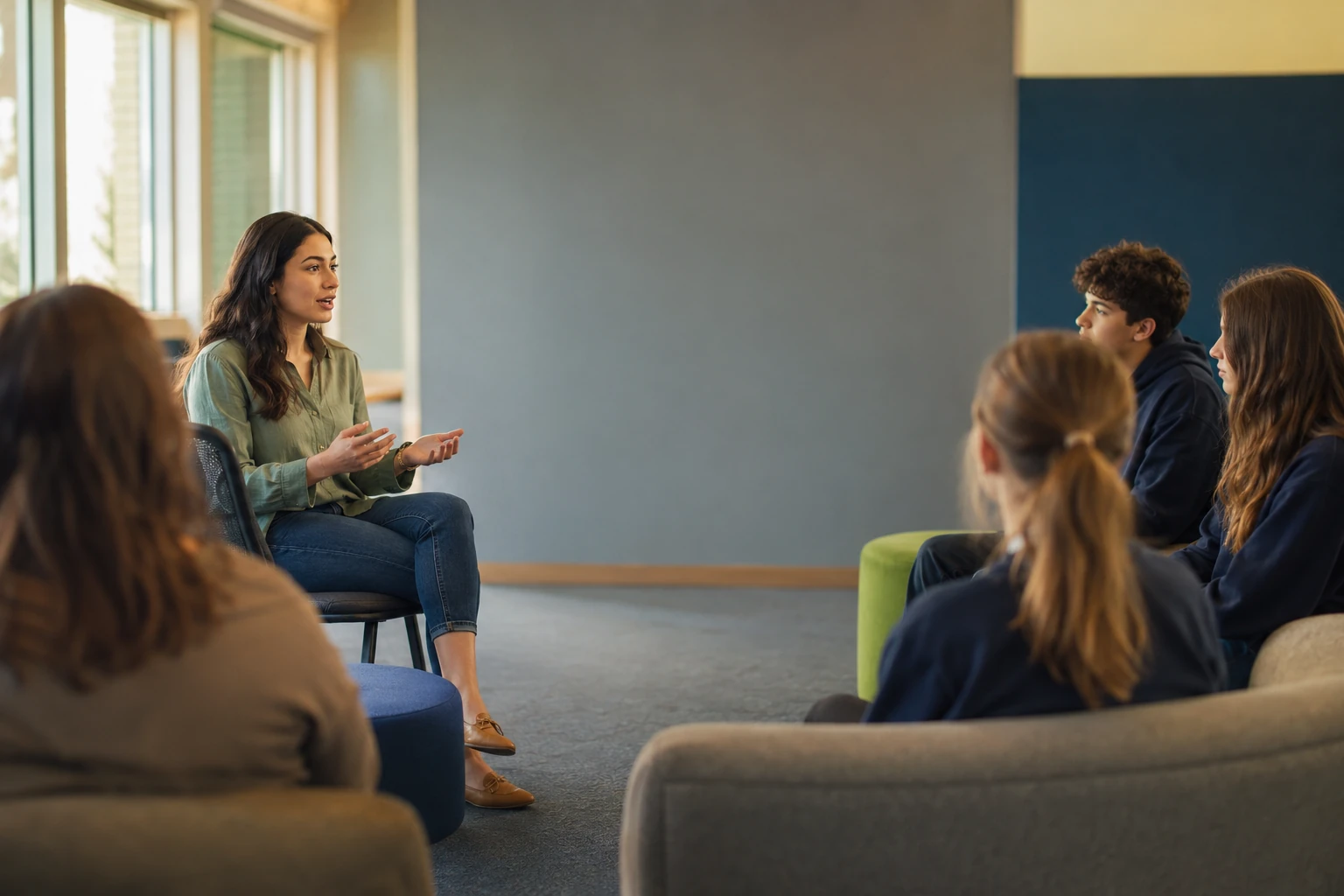
So, what can counselling do when you feel powerless in the middle of events you cannot control? Quite a lot.
Counselling offers a grounded, confidential space to process fear, anger, sadness and uncertainty without dismissing the reality of what is happening. It can help you separate immediate personal risks from wider concerns, recognise unhelpful patterns of catastrophic thinking and establish healthier boundaries around news and social media.
It can also help you focus on what remains within your control: your daily routine, relationships, physical wellbeing, personal values and the actions you choose to take. For people experiencing clinically significant anxiety, a systematic review of randomised trials found that psychological approaches including cognitive behavioural therapy can reduce anxiety symptoms. [5]
When the Weight of the World Feels Personal

It is easy to dismiss these reactions. You might tell yourself, “This is happening far away,” “Other people have it worse,” or “I should be able to stop thinking about it.” But emotional distress is not determined only by physical distance.
An event may feel personal because it affects people you identify with, reminds you of something you have experienced before or threatens your sense of security and hope for the future. Family connections, cultural background, migration experiences, financial pressure and previous trauma can also influence how strongly you respond.
Stress may appear physically through headaches, muscle tension, fatigue, nausea or disrupted sleep. Emotionally, it may show up as irritability, sadness, numbness, guilt, difficulty concentrating or a low-grade fear that never fully subsides. These are common human responses to distressing circumstances, not evidence that you are weak or overreacting. [6]
For many people, these feelings ease with time, rest and support. However, a constant cycle of checking headlines, watching distressing footage and reading emotionally charged reactions can repeatedly reactivate the same stress response. The result can be exhaustion without any greater sense of understanding or control.
You do not have to choose between caring about the world and protecting your wellbeing. A healthier approach might involve checking reliable news sources at set times, avoiding repeated graphic footage, maintaining regular sleep and meals, speaking with people you trust and taking constructive action where it is realistically possible.
The WHO’s Doing What Matters in Times of Stress guide recommends practical skills such as grounding yourself in the present, creating space for difficult emotions, stepping back from unhelpful thoughts and acting according to your values. [7] Counselling can help you develop and apply these skills in a way that fits your circumstances, culture and personal needs.
References
- Stress: questions and answers, World Health Organization, 2026.
- Geopolitical conflicts and unrest impacting the mental health of people in Australia, National Mental Health Commission, 2026.
- The Mental Health Impact of Daily News Exposure During the COVID-19 Pandemic: Ecological Momentary Assessment Study, Kellerman et al., JMIR Mental Health, 2022.
- Media’s role in broadcasting acute stress following the Boston Marathon bombings, Holman, Garfin and Silver, Proceedings of the National Academy of Sciences, 2014.
- Psychotherapies for Generalized Anxiety Disorder in Adults: A Systematic Review and Network Meta-Analysis of Randomized Clinical Trials, Papola et al., JAMA Psychiatry, 2024.
- After a distressing event has happened, Australian Red Cross.
- Doing What Matters in Times of Stress: An Illustrated Guide, World Health Organization, 2020.